
The Spanish banking system is adequately capitalized and well functioning. However, from a consumer standpoint, there are many quirks that make banking in Spain different than other countries, especially those outside of the Euro zone. This handy guide of Spanish banking tips for expats will walk you through the basics.
How many banks are in Spain?
Spain has 184 deposit institutions,108 of which are Spanish banks plus 76 foreign branches. Most of the 184 Spanish banks are small regional or local banks. These smaller banks are not supervised by ECB regulators, thus we don’t recommend putting any money in them. We recommend banking at one of the Big Four: Banco Santander, Banco Bilbao Vizcaya Argentaria (BBVA), CaixaBank or Banco Sabadell. Banco Santander has over twice the global assets of BBVA, the next largest Spanish bank. Santander’s global asset portfolio is so large (close to 1.5 trillion euros) that it is considered a bank that is important to the global banking system. For this reason, we would consider it the safest bank in Spain. This is because it is more closely watched by EU regulators and, if something were to happen, it would likely receive international assistance.
In 2024, the Dutch ING Bank achieved the position of the sixth largest bank in Spain with a market share of 3.78%; its total assets grew by 54.41%. Many expats we know are happy banking at ING. Their app is probably the best of all the Spanish banking apps.
Are Spanish banking deposits insured?
In short, yes. They are insured up to 100,000€ by the European Deposit Insurance Scheme (EDIS). Note that, as in the US, this only applies to traditional bank deposits. It does not apply to cash in a broker dealer account, portfolio management company, private equity firm or other investment vehicle.

Do you need a Spanish bank account to purchase real estate in Spain?
Yes, you do. You will also need one for many other functions if you don’t have another SEPA account (euro denominated account). This is because, unlike in the US, many payments are made via direct bank transfers. Bank transfers between SEPA accounts are quick, easy and if not free, only a couple euros. It is difficult, expensive and often impossible to make a transfer from a traditional US account to a SEPA account, unless the transaction is personally authorized in the US. The same is true of UK based accounts.
If you are purchasing a property in Madrid, we do not recommend letting your Spanish bank handle your currency conversion- they will not give you a very competitive rate. We recommend opening a Wise account and transferring your dollars, sterling, or other currency into it. Then you can easily convert your currency into euros at the most competitive rate offered in the market. From here, you transfer the funds into your Spanish bank account. To learn more about the process, we recommend you read: Guide to currency conversion when buying a property in Madrid.
Which are the best banks for expats?
Opening an account with any of the big ones: Santander, BBVA, CaixaBank or Sabadell is safe.
When it comes to customer service, they are all about the same. They can all be frustrating. CaixaBank is perceived by many as a little more customer friendly. A drawback to CaixaBank is that you can’t pay government tasas (taxes) at their ATMS/cash points. BBVA has the easiest to use cash machines when it comes to third party payments, and they are open late on Thursdays, so we would recommend expats bank with this institution.
EXPAT TIP: If you don’t speak Spanish, we recommend banking at the CaixaBank located at Calle de la Princesa, 12, in Madrid. There are people there that speak English. Moreover, it is one of the few banks in Spain that is open after lunch. Although it closes at 2:30pm, it reopens on Thursday afternoons from 4:15-6:30pm.

What if I want to get a Spanish mortgage?
Many investors find leveraging their property by obtaining a Spanish mortgage an excellent option. Not only will leveraging your purchase help you increase your return, but Spanish mortgages are typically much cheaper than those in other countries. As of early 2026, mortgage rates in Spain generally range between 2.5% and 4.5% for fixed-rate deals, with average rates hovering around 2.87% to 3.17%. Variable rates typically combine the 12-month EURIBOR (around 2.2% in March 2026) with a spread, often resulting in rates between 2.9% and 3.5%. Non-resident rates are usually higher, often starting from 3.2%.
For comparison, as of early April 2026, U.S. mortgage rates had risen for five consecutive weeks, with the average 30-year fixed rate reaching 6.46%, up from lows below 6% in February.

If you are interested in obtaining a Spanish mortgage, we recommend you work with a mortgage broker. Although they charge additional fees, they typically have a broad network of lenders and can help you obtain a favorable rate, which can often offset their fees. To learn more, we recommend you read our article: Spanish mortgages for investors.
How does an expat open a Spanish banking account?
First, you will need to speak at least some Spanish. If you don’t speak Spanish and don’t have anyone to go with you, we recommend the Caixabank branch on Calle Princesa in Madrid (see our Expat Tip above).
There are two types of Spanish bank accounts available to expats: non-resident accounts and regular bank accounts. To open a non-resident account, you will need to obtain a certificate of non-residency from the police station, complete it and bring it to the bank, along with your passport and a photocopy of the first page. Some banks, if you seed your new account with enough money (typically at least 10,000€ but this varies not just from bank to bank, but from branch to branch) will provide you with the form, or waive it entirely. If you have Spanish residency, you can easily open an account for residents.
Madrid Estate is a full spectrum property and relocation firm, so if you use our services to search for, and purchase, your dream property in Madrid, we will help you open a Spanish bank account. You can contact our founder Fabiana Greci directly at fabiana@madrid-estate.com or WhatsApp +34 680 306 337 to get your property search started.
To open a traditional Spanish banking account, you will need to bring:
- Your TIE (Spanish identity card). These are still called NIEs by almost everyone in Spain, so don’t get confused when they ask for your NIE.
- Your passport
- A document proving your Spanish address. This can include a utility bill, lease or Empadronamiento.
Note that different branches have varying requirements, so if you find a branch is asking for an overwhelming amount of documentation, just visit another one.
Post-covid, all Spanish bank branches require appointments to open new accounts. Theoretically this can be done online, but we recommend calling your chosen branch and doing it.
Spanish banking tips for expats
Now that we have the basics down, let’s get started on the trickier things you need to know about banking in Spain.
Spanish banking offices
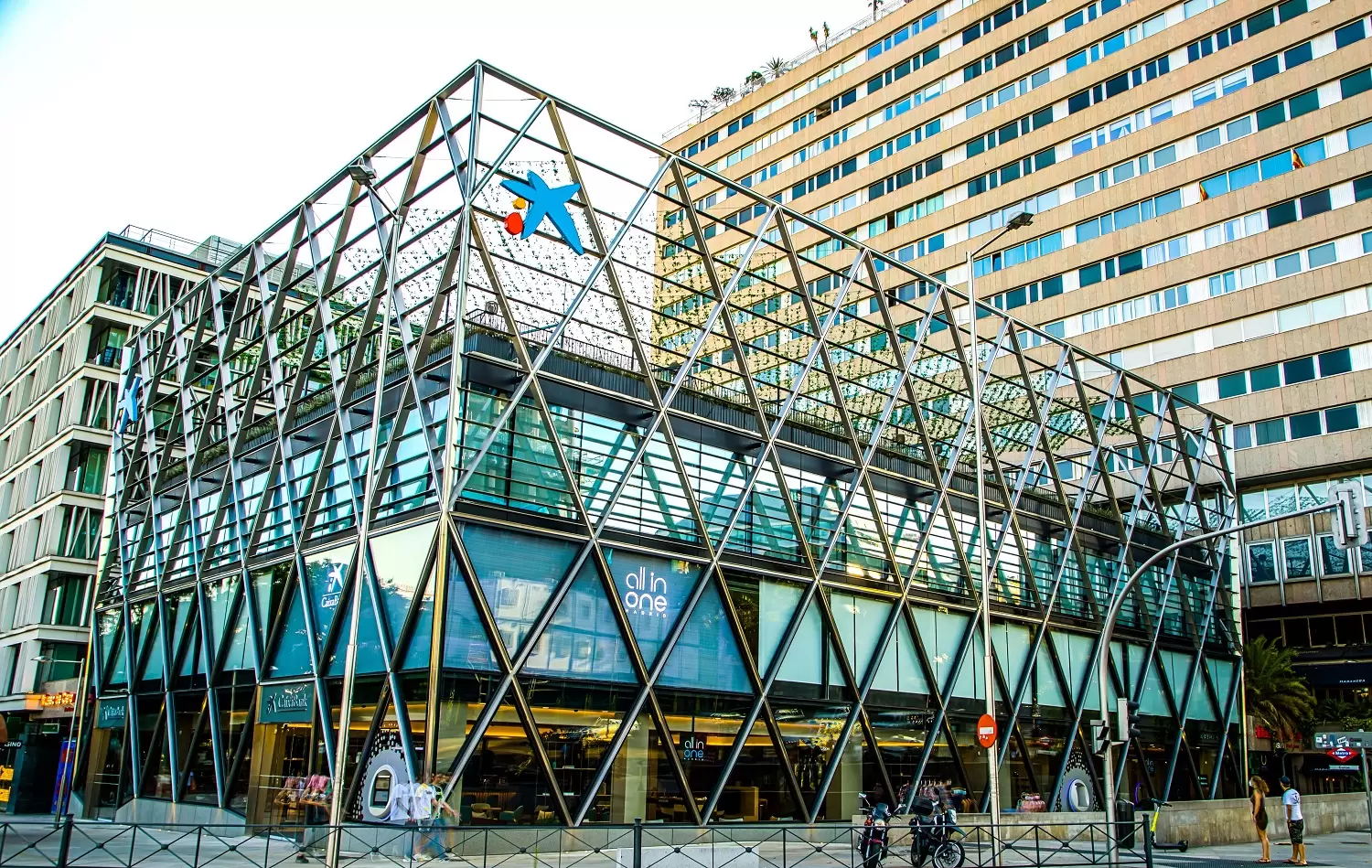
Many of the banking offices in Spain have been given facelifts, so they look quite modern. Don’t let this fool you.
Hours
Spanish banks are open from 9am-2pm or 2:30pm (CaixaBank). Don’t get there right before 2pm, as often most counter functions shut down around a half an hour before closing time. There are some small exceptions to this. You might find large branches of Santander and CaixaBank open as early as 8:15am and close as late as 2:30pm, but make sure you carefully check the hours before you go. Some branches of CaixaBank and Sabadell are now open late on Thursdays (typically until 6:30pm).
Services
If you need to go to the bank to talk about your account, you MUST go to the branch where you initially opened your account. There is zero flexibility in this. This is the Spanish banking tip for expats we cannot stress enough.
There are some non-bank account related functions you can perform at a Spanish bank counter (like paying some small taxes). Theoretically you can go to any branch to do this. In the past this was true, but now most banks only perform counter functions for their customers. If they do perform transactions for non-customers, they are typically in very small, inconvenient windows of time, at a maximum of twice per week.
Required paperwork
After you open your account, it’s not uncommon to wake up one day and find your account frozen. Spanish banks have a lot more authority than US or UK banks. If they require some new form of paperwork, they often just freeze the account with zero notification. You must then go to the branch where you opened it and find out what happened. Examples of this include providing an updated copy of your Spanish residency permit, or (for US Citizens) filling out mysterious documents requested by the IRS.
Cross selling
Spanish banks are excellent at cross selling. They will try and sell you all types of insurance (even health insurance), mortgages, asset management services, savings accounts, pension funds, credit cards, phones, TVs, sporting equipment, cars and even vacations. Always shop these purchases around before you buy any of them from your bank.
If you take out a Spanish mortgage, they will force you to purchase life insurance and even other types of insurance before executing the mortgage. Our recommendation is to get your gestor (like an accountant but not very tightly regulated) to read any documents before you sign, as the bank often slides other investment products into them.
ATMS in Spain
In Spain, ATMS/cash points are called cajeros. You can now do a great many things at them, aside from withdrawing/depositing cash. You can pay bills to third parties, make transfers, buy tickets and even recharge your phone. Some of the cajeros offer facial recognition and can even interface with your mobile phone. The only thing is that they can be a little tricky to use. It can also be confusing because there can be two cajeros right next to each other, at the same bank, but they don’t offer the same functions. We have found the BBVA cajeros to be the easiest to use. Additionally, at most branches their employees will come outside and help you.

Paying tasas for the bureaucracy
Pretty much anything you do with the Spanish bureaucracy requires you to pay a tasa, which is a little tax. This includes getting a non-resident certificate and renewing your residence card. When you perform the function you print out a form, which contains a bar code. You can take this to a cajero and pay the tasa there. The machine will print out a payment receipt, which you ship off with your documents to the relevant bureaucratic office. Again, BBVA cajeros are by far the easiest at which to do this. The slick new Santander cajeros make it look like it will be very easy to pay a tasa, but that’s usually not the case.
Non-payment of banking fees and other debts
Spain is not a country where you want to be in debt. If you don’t pay your banking fees, banks have the power to collect them from other sources of income. This is also true of taxes. For example, if you own a company and don’t pay all your taxes, the government will go to your clients, tell them you are in debt and demand your client pays the bill for your services directly to the government, rather than paying you directly. The government can also take money from any other Spanish bank account you have to pay an uncollected tax.
Conclusion
There are a lot of wonderful things about living in Madrid, but dealing with Spanish banks isn’t one of them. We recommend you open a Spanish account to purchase your Spanish real estate, then maintain just enough money in the account to keep it open and pay any fees inside Spain (phone bill, taxes, etc.) Then, open an account such as Wise (best for Americans) or Revolut (best for people from the UK), for all other purchases.
Are you ready to start looking for your dream property in Madrid? We can help with all aspects of the process, including opening your Spanish banking account. You can contact our founder Fabiana Greci directly at fabiana@madrid-estate.com or WhatsApp +34 680 306 337 to learn how we can help with your relocation to Madrid.


